

 You will be talking to the Steven Palmieri practice.


Four amounts, then the month
What the batch is hiding
A week worth trusting shows the service, the retail, the tips that were never the shop's to keep, and the deposit the bank actually posted. Fold the service into the retail, or fold a tip into either one, and the month can look finished while you still cannot tell which part paid the rent. The longer notes live in the closed rows under this heading. Leave a row shut. The reason is inside it.
The card machine reports one number because the processor sees one batch. The week was not one thing. A color service, a jar the client carried out, and cash that belonged to the person who did the work can all touch that batch. Until each has a name, the sales total is a blend, and a blend cannot tell you which part of the week paid the rent.
We start from the ticket or the appointment, not from the batch. When the ticket names a service and a product, those stay two lines. A ticket that names only one price keeps that one price until a later ticket says more. A silent ticket stays one line, and we refuse to manufacture a product sale just so the month looks sorted. The note on a bottle at the bowl is the used product. The note on product on the return is the product that was sold.
The opening form on this page wants the mixed amount first, and only then a name, a phone, and an email. Year size and the last closed month wait for a later form. We want the deposit in view before anyone is asked for a year of context.
Where the deposit disagrees
A card batch and a day of appointments are different objects. The processor keeps a fee. A tip can ride inside the batch without becoming a sale. The bank can post the money the next morning. The close names the timing rule this shop actually follows. Keep every ticket on the day it was written, or move every ticket to the morning the bank shows the money. One rule, for the whole month. Change it halfway through and the same deposit can land in the books two times.
Booth rent can sit in that same deposit. That money is rent the salon took in for the chair, so we keep it on its own line. Rent received keeps that line alone. The card fee explains why the bank number is smaller than the tickets.
What the first call needs
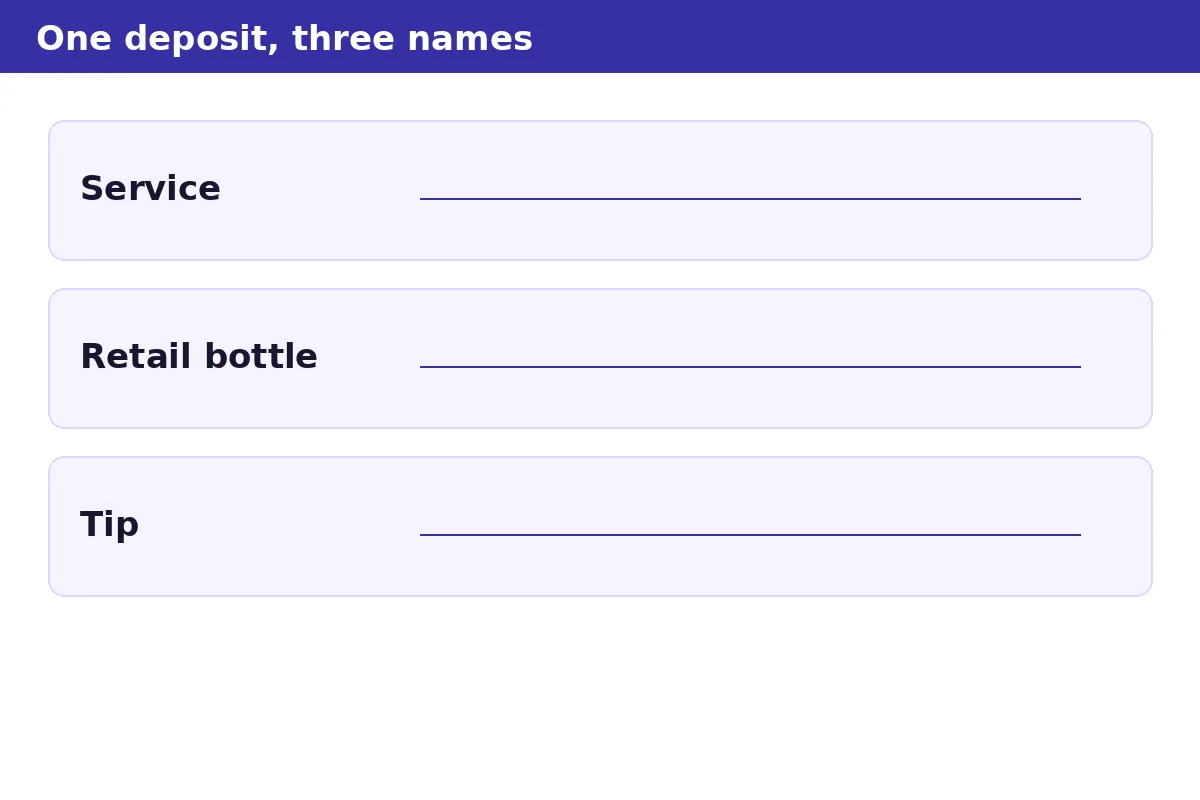
One deposit is enough. Bring the batch, the tickets you think it covers, and a note if tips or rent are inside it. A single week shows whether a service and a bottle share one line. A month that arrives as one sales total next to one bank deposit is named as a blend, and it stays a blend until a ticket splits the service from the bottle. If the tickets never separated a service from a bottle, we leave them together and say so. That case is drawn, with the dollars left off, on the blank shape.
You get the books, a close each month, statements, pay set up on the company you already use, and a return only from months that have closed. Once that conversation ends, a signed letter can cover closing each salon month, matching the bank to the tickets, drafting the statements, leaving payday with the company already on the account, and holding the return until those months are finished. A lender letter that wants an audited statement, a reviewed statement, or a compiled statement leaves the deposit with this practice, and the signature is forwarded to a firm allowed to give it. Open the disclosures page and read the heading Signatures we do not offer before you ask this practice for one of those signatures.
A report that is due on the tenth
Publication 531 is the page we open when people on the salon payroll take tips. If one of those employees takes in $20 or more during a calendar month, the written report to the employer is due on the 10th of the following month, the dollars land on the wage record, and they are not typed into salon sales a second time. A studio where the owner is the only person in the room is a different case. We do not force that employee report onto the owner.
Form 8846 is easy to grab because the word tip is on it. The instructions limit that credit to food or beverage service where tipping those employees is customary. A salon week does not become a dining room because the tips were large. The page that says so is the 8846 credit. The page that walks the tenth is tips by the tenth.
What we leave off the page
These examples name no client, print no batch total, and name no town. A bowl on this page is any bowl. Color opened during a service, a bottle sold at the shelf, rent for a room, a tip written down by the tenth, and a card sold before the visit are composites. The amounts stay different even where a state taxes two of them alike.
Every ceiling on these pages names the government page it came from. A section 179 ceiling points at Revenue Procedure 2025-32. When a salon page mentions a 1099 test, the dollar comes from that year's instructions for that form, not from memory of a prior year. No sales-tax rate is printed here, because the revenue office that collects from the shop publishes the list and revises it on its own calendar.