Beauty and Wellness Business Books Cleanup A four-year story is not the federal clock
A client paid for a package at the counter and asked why the visit is not a second sale. People talk about certificates as if they linger for years. Federal income uses a shorter rule.
Bring the cardTwo days, not a vague life
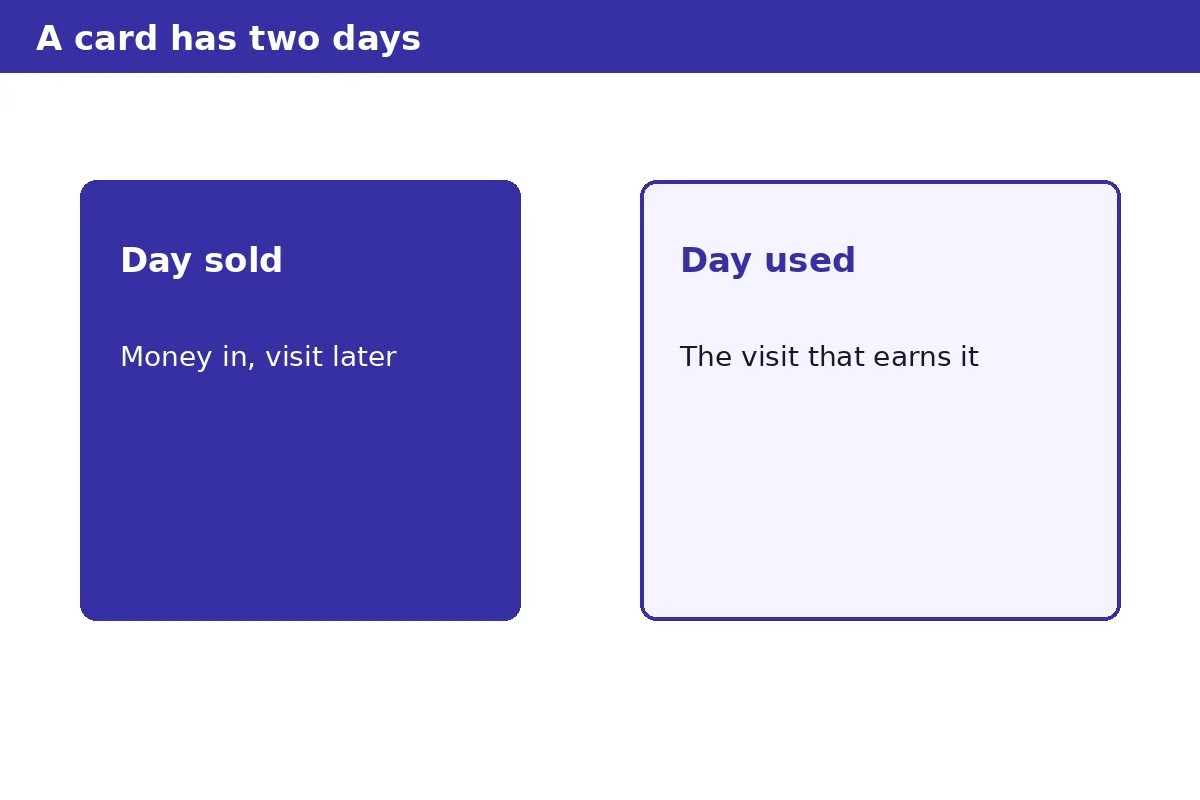
A gift card, a package of visits, or a prepaid series has two days that matter in the books. The day the client paid. The day you performed the service, or handed over the product. On the day they paid, you either have income or you have an amount you still owe in services. On the day you perform the work, the amount you were holding becomes the service, or it was already income and the visit is just the visit. Recording sales on both days counts the card twice. Recording it on neither day loses it.
Cash-method owners often take the money into income when it arrives. Accrual-method owners may defer certain advance payments, and the federal deferral people are usually thinking of is one tax year, not a long hold. We name the method the books already use. We do not switch methods because a certificate feels like it lasts.
Why four years keeps coming up
A four-year figure usually comes from a state's unclaimed-property clock for unused cards. That clock is not the same in every state, so this page does not print a year as if it were a federal rule. Unclaimed property, when it applies, is a report to that state. It is not a reason to leave the card out of income and also out of any liability.
If the card is redeemed for a retail bottle rather than a service, the redemption is product. That split only works if the redemption says so. Otherwise it stays a service when the visit happens. See product on the return before you force every redemption into retail.
Name the card
 You will be talking to the Steven Palmieri practice.